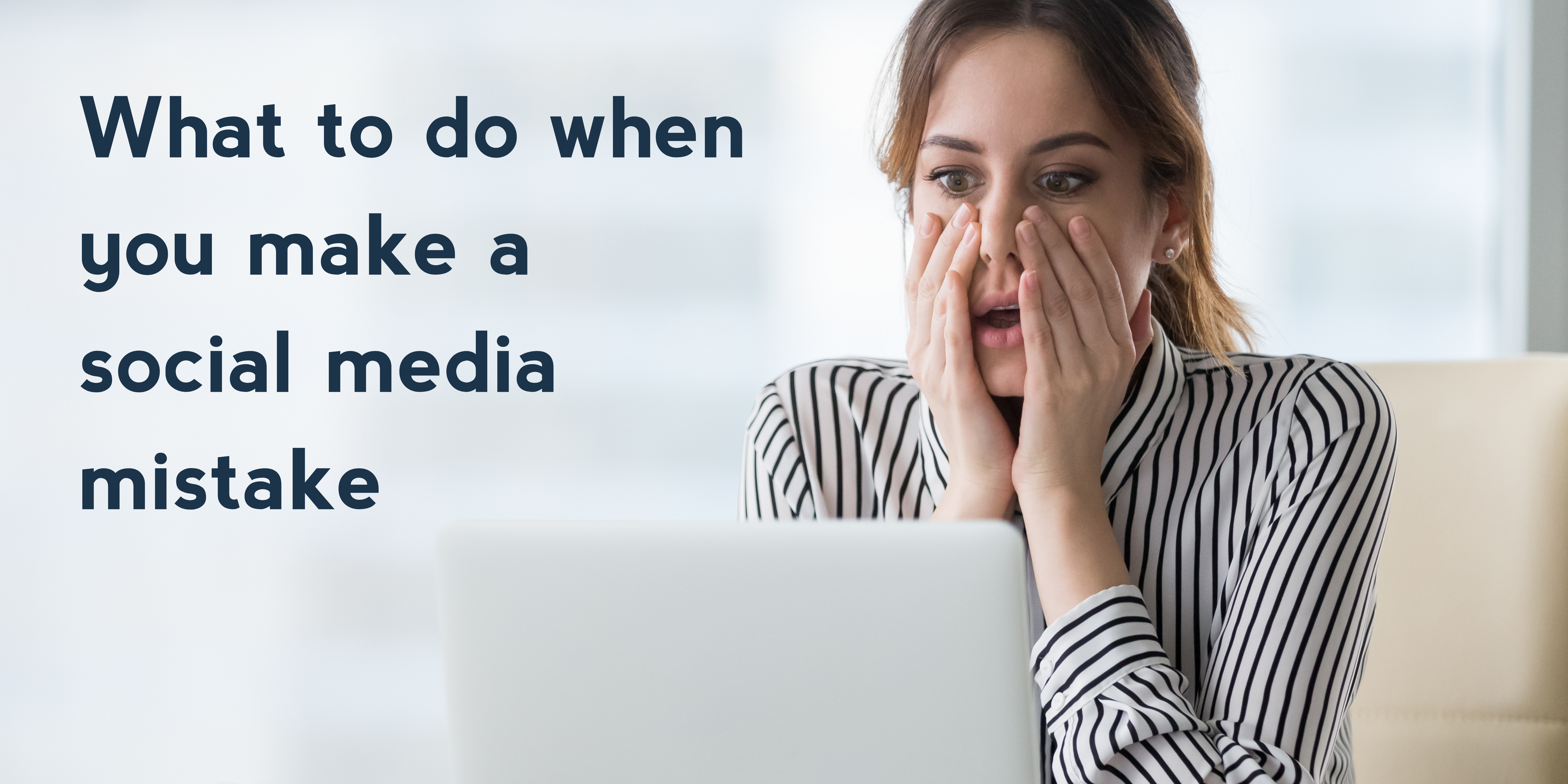
I used to stare at any mistake I made on social media and be so mad at myself. It was a horrible habit. But it was also just my personality because I’m a perfectionist.
Now? Although I do my very best to have several checkpoints before content goes live, I know that mistakes happen. I’m human. My clients are human. We miss a mistake from time to time. So for most mistakes I shrug my shoulders, make any necessary corrections and move on with my life. It’s the healthier choice, and it has helped immensely with my mental health.
But obviously there are different kinds of mistakes and different ways to handle them. So let’s take a look at a few of them.
Grammar
To me, this is the least problematic of mistakes. A grammar mistake can happen even with many eyes on it. As long as it doesn’t make it really hard to understand the post, just make the correction and move on. And ignore anyone who wants to make it a huge deal. It’s really not. It’s just being human.
Now, if the mistake makes the post unreadable, make the correction and then reflect. Do you have enough checkpoints before your content goes live? Are you just writing and then posting right away? Do you have another set of eyes to look at posts? Do you write your posts one day and edit another?
If you feel comfortable with your processes and this was just a one-off, then it’s fine to move on. But if it’s starting to be a pattern, you really need to change those processes regardless of whether you want to. It’s too important that you guard yourself against a mistake. And holding onto something that no longer works is not going to help you at all.
Factual
This is a mistake you have to protect yourself against before you make it. I have a clause in my contract that protects me against being found liable for factual mistakes based upon information that the client gave me. This is something that everyone who works in social media needs to have in their contracts, because you never know what might trigger a lawsuit.
Then, when you make the mistake, you need to correct it as soon as possible. And it’s likely that you need to take down the post immediately so you have time to really make sure everything is correct. The worst thing that can happen after you post factually incorrect content is to have another piece of the post to also be incorrect. Moving slower and making sure every single fact is correct will help immensely here.
And this time, you need to make sure the reflection goes as deep as possible. Did you provide the incorrect information or were you given it by someone else? Are they your client contact or were you just trusting them because they came from the organization? What checkpoint failed as you were putting this post together? Did everyone who needs to look at this post?
In my experience, the latter is most likely where the failure happens. If it goes live before the correct eyes get on it, that’s when mistakes get made. So, especially when I’m dealing with facts, I make sure my client contact’s eyes look at what I’m planning on posting.
But the other place where I’ve seen a lot of mistakes is when there are too many people are trying to tell me about something I need to post on. Facts start getting muddled. That’s when a glaring mistake appears. This is one of the reasons why having one client contact is important.
Community management
A community management mistake is one that scares me the most. People will forgive a lot, but they will remember how you made them feel. And if you made them feel bad as the brand, they will remember that and not be very loyal to you.
This kind of mistake can take many forms. It can be ignoring questions, giving a bad response to a comment, letting a racist comment stay on your post and more. While leaving bad comments on your posts can be okay (but not great) on larger pages, it can look like tacit approval on a smaller page with fewer comments.
Your first step is to apologize if it’s necessary, and nine times out of ten it is necessary with this kind of mistake. Make sure that this apology addresses any hurt the person may feel with empathy. A bad apology is worse than no apology.
After you apologize, do any necessary action. Whether that’s answering their question or giving them the kind of response they were looking for, make sure it happens.
Finally, you need to have some kind of reflection on how this happened. In most cases, the breakdown is the social media manager. That’s not to say it’s completely their fault, but that they are likely going through something that makes community management hard. A big part of being a social media manager is taking care of your mental health and being aware of when it is slipping. If it’s slipping, then they need to seek support to make sure no mistake is made.
But if they do seek support and their manager says no, then the problem is a lack of support in the workplace. It’s really easy to say that a social media manager needs to do their job. But the fact is that their humanity is a part of their job, and if they’re having trouble connecting because of a mental health issue, then it becomes impossible for them to do their job. In many cases, this is a short-term issue that needs just a little help. Having someone able to step in to lend a hand and providing resources to prevent this kind of situation from happening in the first place can go a long way towards protecting your brand.
Any other kind of mistake
There are way too many kinds of mistakes for me to cover in a short blog post. But the biggest advice I can give you when it comes to a mistake is to just own it.
In the AI era, the thing that can set your brand apart on social media is the humanity behind it. Fans want to connect with other humans. And the biggest sign that your brand has actual humans behind it is a mistake here and there. That’s where the connection tends to happen, not in the perfect posts.
The key to getting to connection through a mistake is owning it and doing your best to make it better. That is all most fans want to see in the end, and they will help you get through the mistake cleanly.
That is not to say you should make mistakes on purpose to get that connection. Trust me, you’ll make enough human mistakes to do the job without adding mistakes to your social media strategy on purpose.
How have you handled a social media mistake?